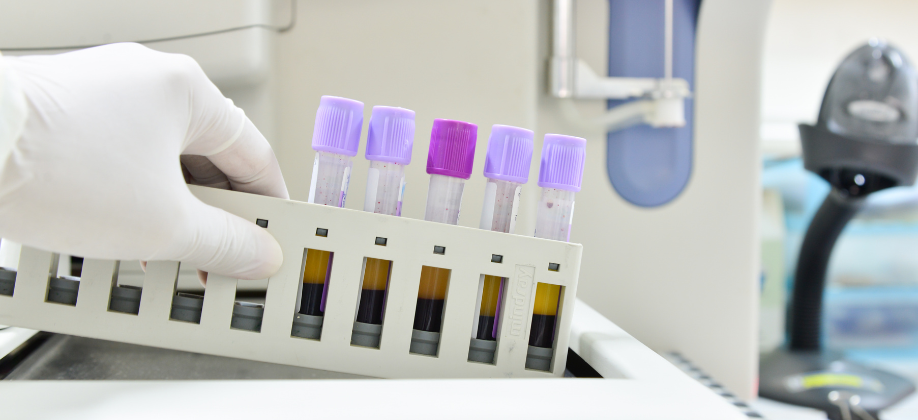
A blood test report can look like a page of unfamiliar abbreviations, percentages, and numbers. One of the most commonly ordered tests is a CBC with automated differential, which provides a broad look at your red blood cells, white blood cells, platelets, and the different types of white blood cells circulating in your blood. Unlike a basic complete blood count, a differential provides additional information about your immune cells. It can help healthcare providers investigate concerns such as anemia, infection, inflammation, bleeding, and some blood disorders. But what does each number actually mean? And which results are considered normal?
This guide walks through the major values you may see on your report, including RBC, hemoglobin, hematocrit, MCV, MCH, MCHC, RDW, WBC, neutrophils, lymphocytes, monocytes, eosinophils, basophils, platelets, and MPV.
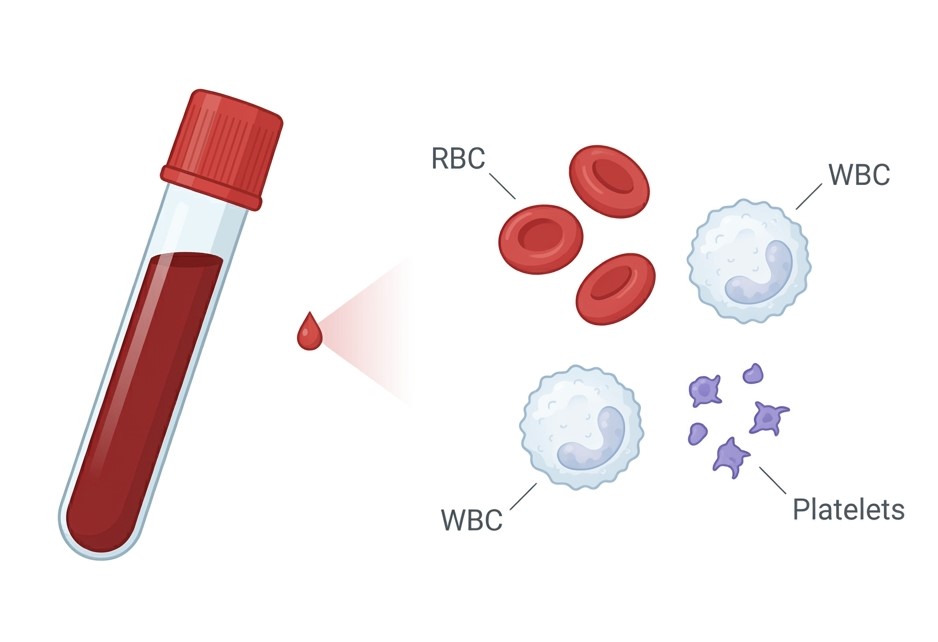
What Is a CBC With Automated Differential?
A CBC with automated differential is a blood test that measures the major types of blood cells and provides a breakdown of the different white blood cells.CBC stands for complete blood count. The test measures red blood cells, hemoglobin, hematocrit, white blood cells, platelets, and several measurements describing the size and characteristics of these cells. When a differential is added, the laboratory also reports the proportions and/or absolute numbers of the five major white blood cell types.
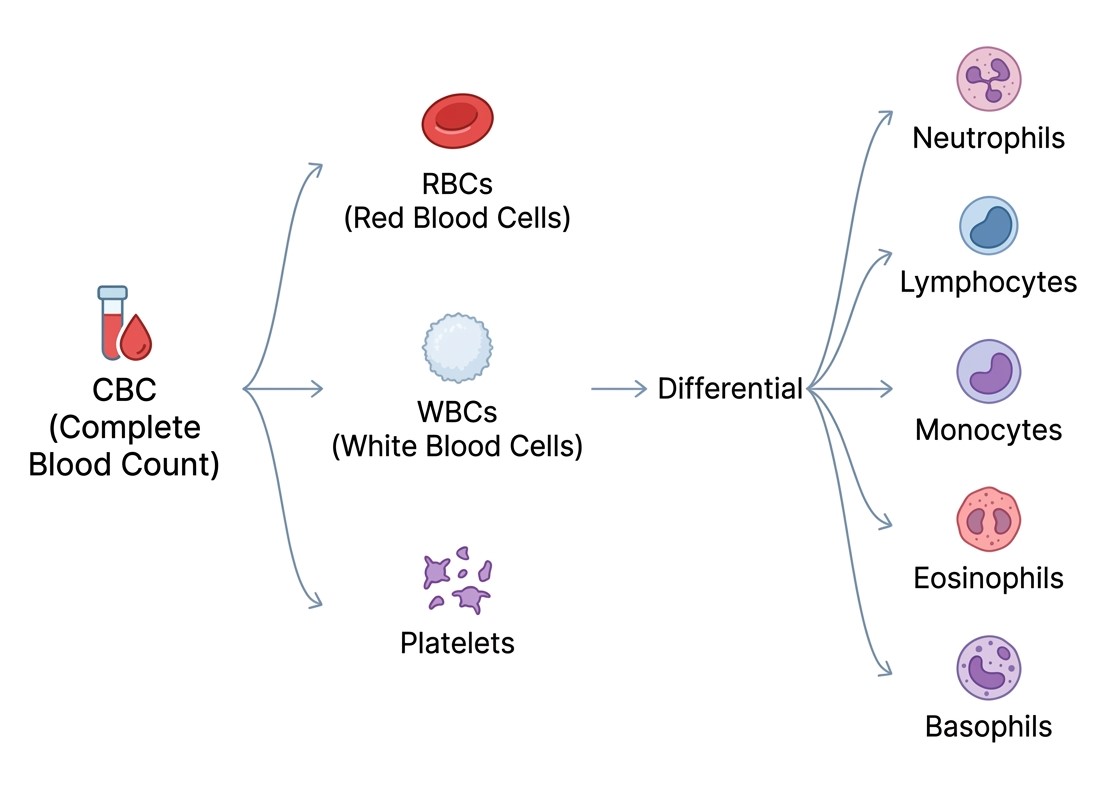
So, what does CBC w auto diff test for? In simple terms, it gives a broad snapshot of your blood and immune system. It may help identify patterns associated with anemia, infection, inflammation, immune disorders, or abnormalities affecting blood-cell production. The word "automated" means that an analyser performs much of the cell counting and classification electronically. This allows laboratories to process blood samples efficiently and consistently.
An abnormal result does not automatically mean that you have a disease. A temporary infection, dehydration, exercise, pregnancy, medications, or other factors can affect some blood counts.
Automated vs Manual Differential
The terms automated and manual differential describe how white blood cells are identified and counted.
Automated vs Manual Differential: Key Differences
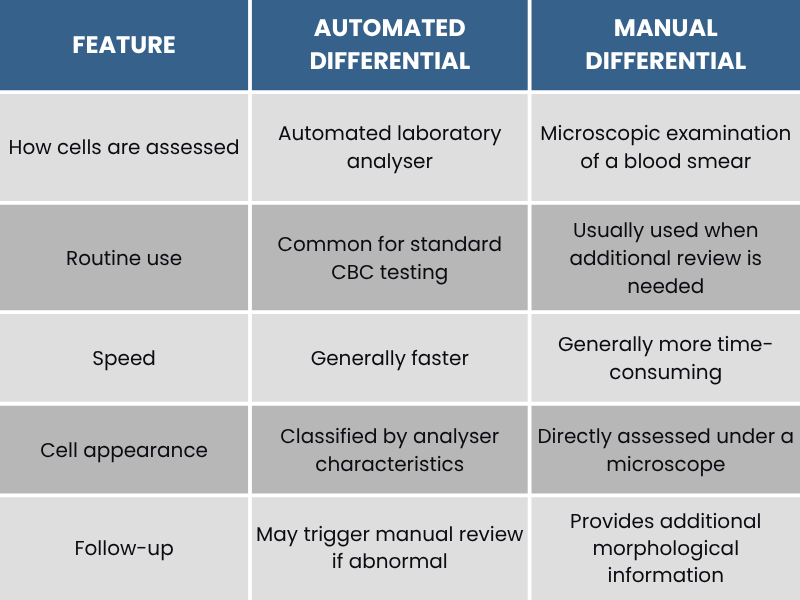
An automated result therefore does not mean that your blood was "not properly checked." Rather, automated analysis is designed for efficient and reliable routine testing, with manual review available when certain findings require further assessment.
Every Value on Your CBC With Differential Explained
A CBC with automated differential can contain many individual results. Understanding what each one represents can make your report much easier to read.
Red Blood Cells (RBC), Hemoglobin & Hematocrit
- RBC count measures the number of red blood cells in a specific volume of blood. Red blood cells contain hemoglobin and transport oxygen from the lungs to tissues throughout the body.
- Hemoglobin (Hgb or Hb) measures the amount of hemoglobin in your blood. Because hemoglobin carries oxygen, low levels can occur with different forms of anemia.
- Hematocrit (Hct) represents the percentage of your blood volume made up of red blood cells.
These three results are usually considered together rather than interpreted independently. For example, low RBC, hemoglobin, and hematocrit values may support a pattern of anemia, while elevated values can occur in situations such as dehydration or conditions that increase red blood cell production.
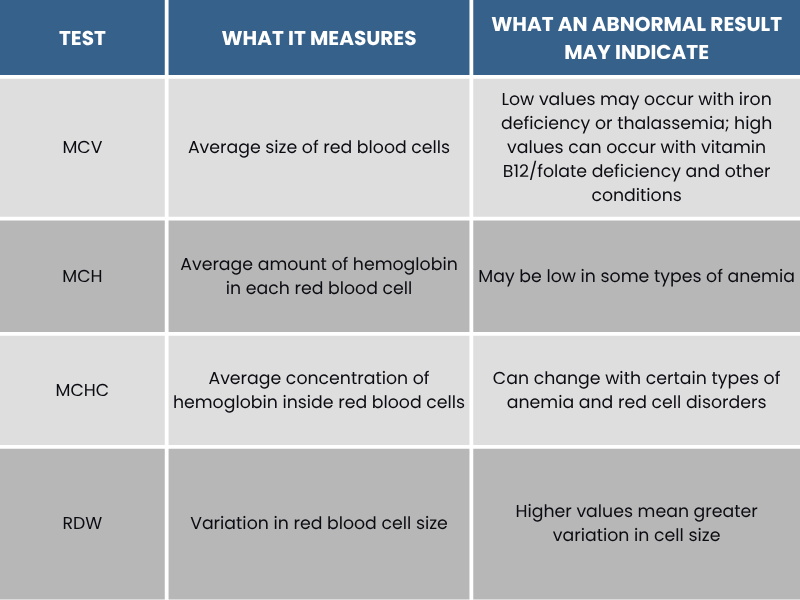
Red Cell Indices (MCV, MCH, MCHC, RDW)
Red cell indices provide more detail about the size and hemoglobin characteristics of your red blood cells. They can be especially useful when evaluating anemia.
White Blood Cell (WBC) Count
The white blood cell count measures the total number of white blood cells in your blood. White blood cells are part of the immune system and help the body respond to infections, inflammation, and other threats. A high WBC count, called leukocytosis, can occur with infection, inflammation, physical stress, certain medications, and other conditions. A low count, called leukopenia, has a wide range of possible causes. This is where the differential becomes particularly useful. Instead of looking only at the total WBC count, your healthcare provider can see which types of white blood cells are contributing to the result.
The Differential: Five White Cell Types
The differential breaks white blood cells into five major types: neutrophils, lymphocytes, monocytes, eosinophils, and basophils. Results may be reported as percentages, absolute counts, or both.
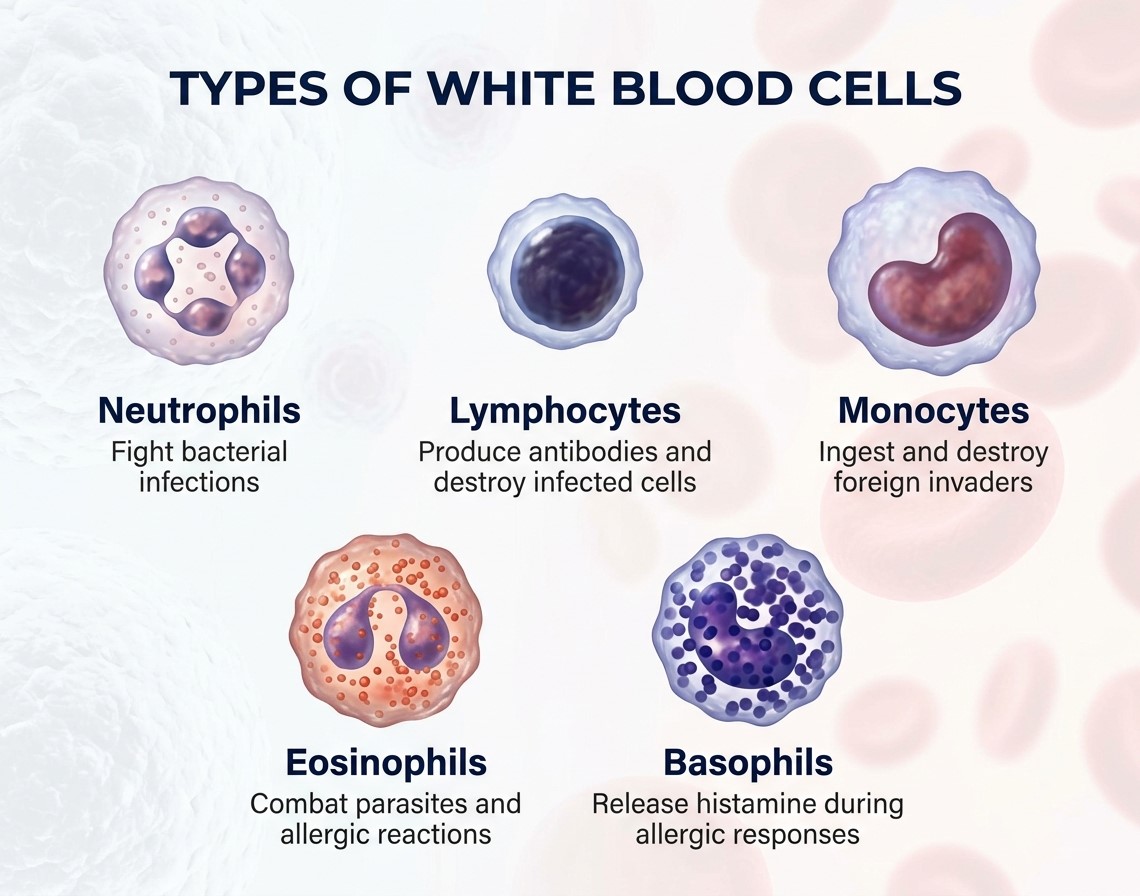
- Neutrophils: These are among the body's main first responders to infection and help defend against bacteria and fungi. A higher neutrophil count can occur with infection, inflammation, stress, or certain medications. Low neutrophils can increase susceptibility to infection depending on how low the count is.
- Lymphocytes: Lymphocytes include B cells and T cells and play important roles in immune responses. Lymphocyte levels can change during infections and with various immune or medical conditions.
- Monocytes: Monocytes help remove damaged cells and participate in immune responses. Higher levels may occur during or after certain infections and inflammatory conditions.
- Eosinophils: Eosinophils are involved in allergic responses and defense against certain parasites. Elevated eosinophils can occur with allergies, asthma, parasitic infections, and several other conditions.
- Basophils: Basophils are involved in inflammatory and allergic responses. They normally make up only a small proportion of circulating white blood cells.
Your report may also show absolute neutrophil count (ANC) or other absolute cell counts. Absolute counts can provide different information from percentages, so a percentage that appears high or low should not be interpreted without considering the total WBC count.
Platelets (and MPV)
- Platelets (PLT) are small blood components that help form clots and stop bleeding. A low platelet count is called thrombocytopenia, while a high platelet count is called thrombocytosis.
- MPV, or mean platelet volume, describes the average size of your platelets.
Platelet count and MPV can provide complementary information, but MPV should not be interpreted on its own. Your provider may consider the platelet count, other CBC findings, symptoms, medications, and clinical history when evaluating an abnormal result.
CBC With Automated Differential Normal Ranges
There is no single universal CBC with differential normal range. Reference intervals can vary by laboratory, testing method, age, sex, pregnancy status, and other factors. The following adult ranges are commonly used as general reference points. Your own report's reference interval should take priority.
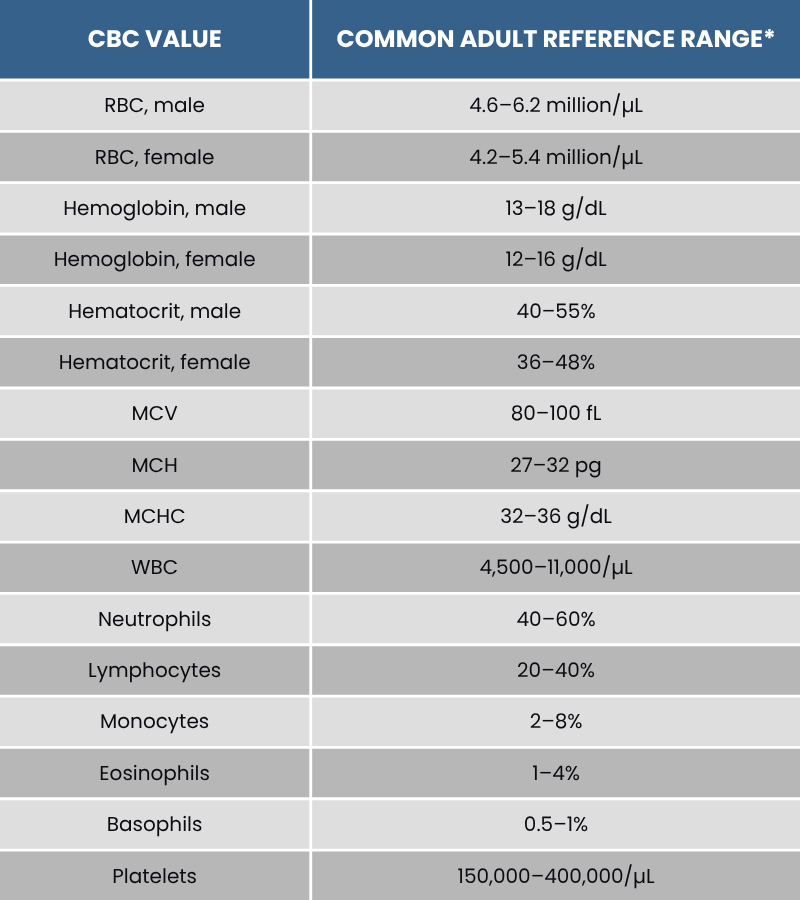
*These are general adult reference values, not diagnostic cutoffs. Laboratory-specific ranges may differ. RDW and MPV ranges also vary between laboratories, so use the interval printed on your report.
For children, older adults, and pregnant people, reference ranges can differ substantially. If your result is flagged high or low, compare it with the reference interval provided by the laboratory rather than relying on a generic online range.
Common Result Patterns and What They Suggest
A CBC with automated differential is most useful when results are interpreted as patterns rather than isolated numbers.
Low Hemoglobin + Low MCV:
This combination can indicate microcytic anemia. Iron deficiency is one common possibility, although thalassemia and other conditions can also produce this pattern.
Low Hemoglobin + High MCV:
This can indicate macrocytic anemia. Vitamin B12 or folate deficiency is one possible cause, but medications, alcohol use, liver disease, and other conditions may also contribute.
High WBC + High Neutrophils:
This pattern can occur during bacterial infections, inflammation, physical stress, or in response to certain medications. It does not by itself prove that a bacterial infection is present.
Low WBC + Low Neutrophils:
This may occur with some viral infections, medications, nutritional deficiencies, immune conditions, or problems affecting blood-cell production. The severity and duration matter, particularly when the ANC is significantly reduced.
High Eosinophils:
An elevated eosinophil count can be associated with allergies, asthma, parasitic infections, medication reactions, and other inflammatory or immune conditions.
Low Platelets:
A low platelet count can increase bleeding risk when it is sufficiently reduced. Causes range from temporary infections and medications to immune disorders and conditions affecting platelet production or destruction.
High Platelets:
High platelets can occur as a response to inflammation, infection, iron deficiency, blood loss, or other conditions. Persistent or markedly elevated results require medical evaluation.
A single abnormal CBC does not necessarily identify the cause. Your healthcare provider may repeat the test or order additional investigations based on the specific pattern.
Should I worry if one CBC value is flagged?
Not necessarily. A flagged result means that it falls outside that laboratory's reference interval. It does not necessarily mean you have a disease. Look at related results and discuss persistent, markedly abnormal, or symptom-associated findings with your healthcare provider.
Understanding Your CBC With Automated Differential
A CBC with automated differential provides much more than a list of numbers. It gives a snapshot of your red blood cells, oxygen-carrying capacity, immune cells, and platelets, while the differential shows how the major white blood cell types are distributed. If you're reviewing your own report, don't focus on a single high or low value. Compare your results with the laboratory's reference ranges and consider the overall pattern. For persistent or significantly abnormal findings, your healthcare provider can determine whether further testing is appropriate.
Want a simpler way to understand your blood test results? Visit MySimpleReport to make sense of your lab results and take a more informed approach to your health.