A high platelet count can appear unexpectedly on routine blood work and may understandably cause concern. What is the most common cause of high platelet count? In most cases, an elevated platelet count is related to a condition or event outside the bone marrow, such as infection, inflammation, iron deficiency, blood loss, or recent surgery. This is called reactive or secondary thrombocytosis. A high platelet count does not automatically mean a serious blood disorder. Understanding the possible causes, whether the elevation is temporary or persistent, and when further testing is appropriate can help put the result into context.
What Is a High Platelet Count?
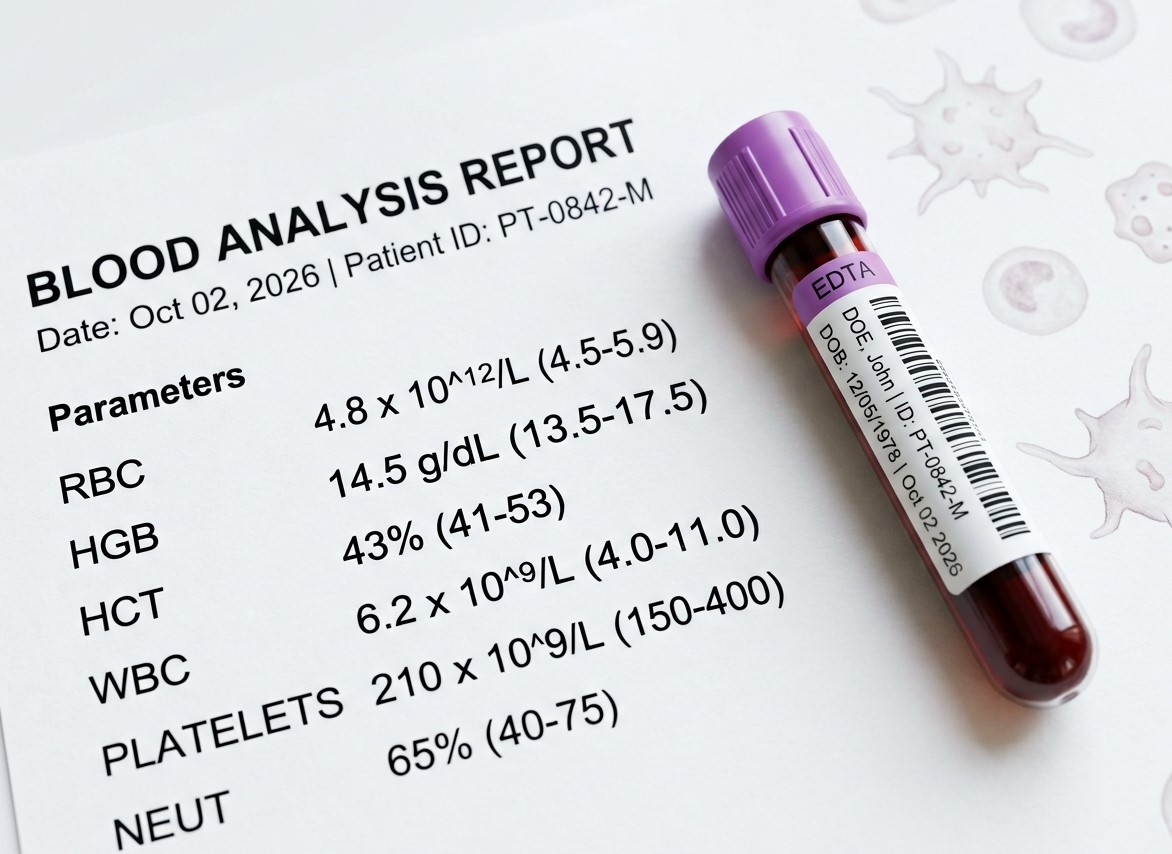
Platelets are small blood components that help form clots and control bleeding. A platelet count above approximately 450,000 per microliter of blood is generally considered thrombocytosis, although laboratory reference ranges can vary. A high result on a complete blood count (CBC) is a finding rather than a diagnosis. Doctors usually consider the result alongside your symptoms, medical history, other blood-test results, and whether the platelet count remains elevated over time.
For example, a temporary rise following an infection may resolve once the underlying problem improves. A persistently elevated count without an obvious explanation may require additional investigation.
What Is the Most Common Cause of High Platelet Count?
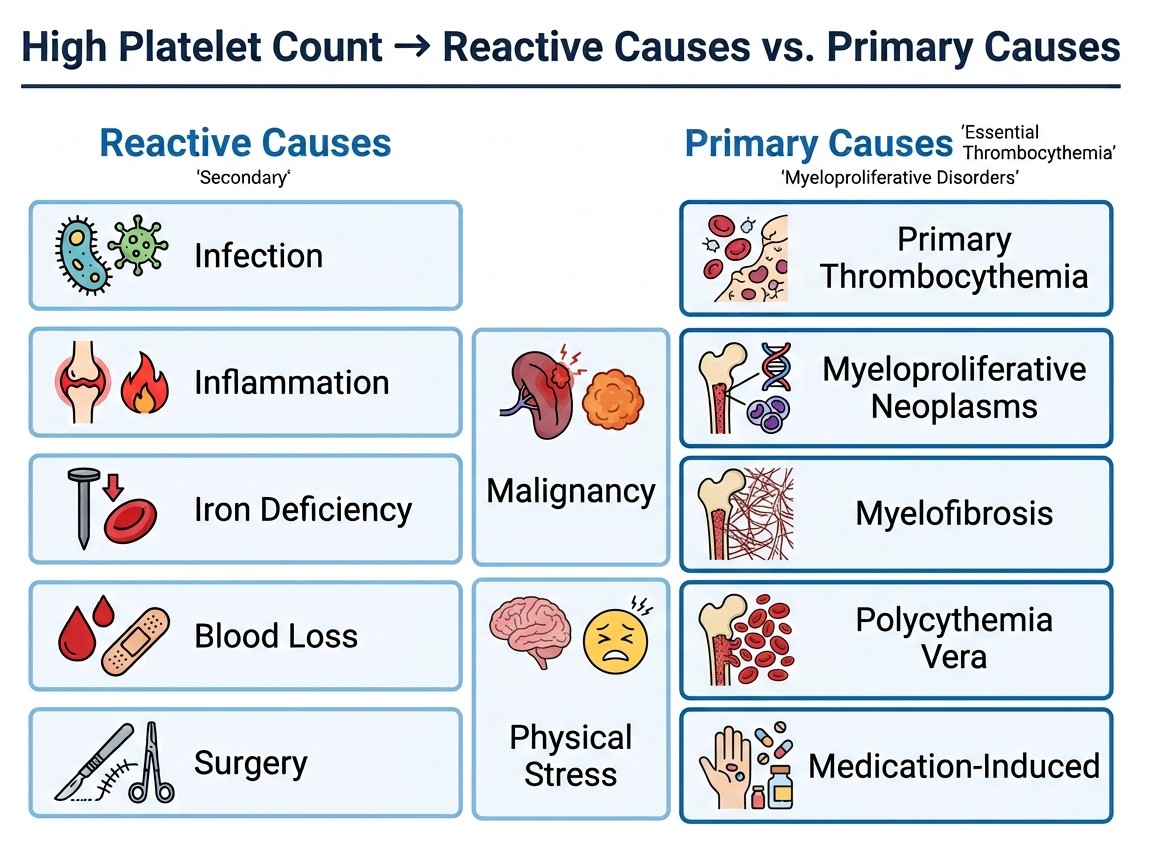
The most common cause is reactive thrombocytosis, also called secondary thrombocytosis. It occurs when another condition or event stimulates the body to produce more platelets. Common triggers include infections, inflammatory conditions, iron deficiency, blood loss, trauma, surgery, certain cancers, and removal of the spleen. This distinction is important because reactive thrombocytosis is different from essential thrombocythemia, a less common disorder in which abnormal bone marrow activity leads to excessive platelet production.
Reactive or Secondary Thrombocytosis
Reactive thrombocytosis is essentially the body's response to another problem. The bone marrow is functioning in response to signals generated by the underlying condition rather than producing excessive platelets because of a primary bone marrow disorder. The platelet count often improves when the underlying condition is treated or resolves. Therefore, identifying the trigger is usually more important than treating the platelet number itself.
Essential Thrombocythemia
Essential thrombocythemia is a chronic blood and bone marrow disorder in which platelet production is driven by abnormal changes in blood-forming cells. It is less common than reactive thrombocytosis. If a platelet count stays elevated and doctors cannot identify an underlying cause, further testing may be considered. This can include genetic testing and, in selected cases, examination of the bone marrow.
High Platelet Count Causes
Several conditions can lead to thrombocytosis. Some are temporary, while others may require ongoing medical evaluation.
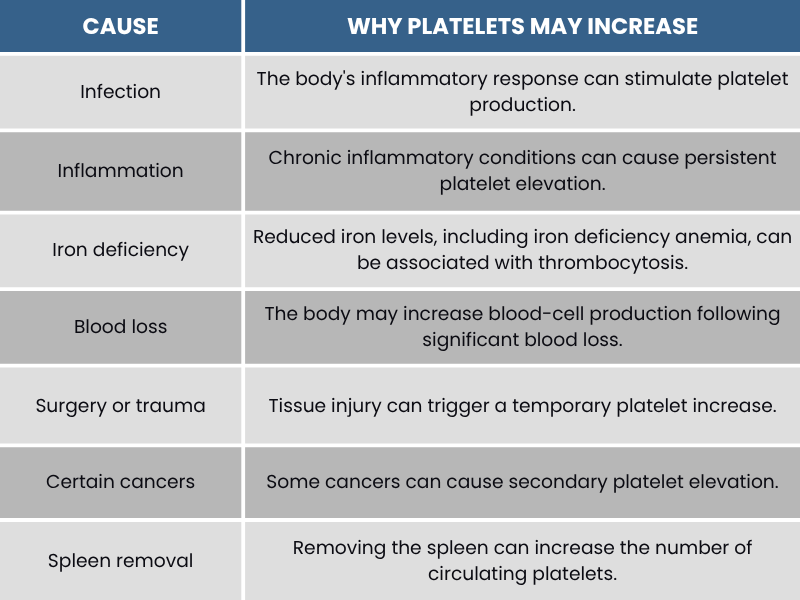
These are among the established high platelet count causes, and the appropriate evaluation depends on the individual's clinical history and other test results.
What Causes High Platelets?
One of the most frequent explanations is inflammation/infection. During an infection or inflammatory condition, chemical signals released by the body can stimulate platelet production. The increase may persist while the underlying condition remains active. Another important possibility is iron deficiency anemia. Iron deficiency can be associated with an elevated platelet count, which is why doctors may check iron studies when an unexplained elevation appears on a blood test.
Other reactive thrombocytosis causes include blood loss, surgery, physical injury, certain inflammatory diseases, some cancers, and absence of the spleen. The underlying trigger often provides more useful information than the platelet number alone.
What Symptoms Can High Platelets Cause?
Many people with thrombocytosis have no symptoms, and the elevated count is discovered during routine blood testing. When symptoms occur, they may be related to the condition causing the platelet increase rather than the platelet count itself.
Some people with significant platelet abnormalities may experience:
- Headache or dizziness
- Vision changes
- Unusual bruising or bleeding
- Nosebleeds
- Weakness or numbness
- Chest pain or shortness of breath
These symptoms do not establish the cause of thrombocytosis on their own. They should be assessed in the context of the person's overall health and test results.
When Should You Worry About a High Platelet Count?
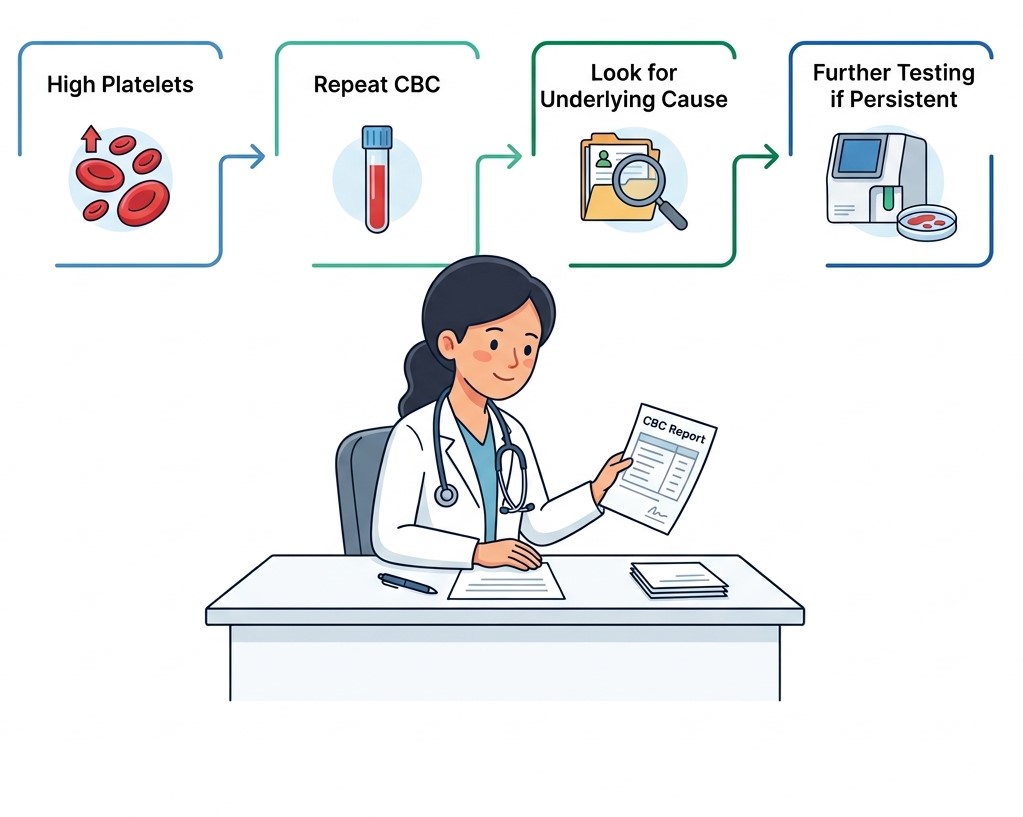
A single elevated result does not necessarily indicate a serious problem. Doctors may repeat the blood test to determine whether the platelet count remains high. If it returns to the normal range, a temporary reactive cause may have been responsible. Persistent or unexplained elevation deserves further evaluation. A healthcare professional may review previous blood counts, look for infection or inflammation, assess iron levels, and consider other tests depending on the patient's history.
Seek urgent medical attention for symptoms that could indicate a serious blood-clotting complication, such as sudden weakness or numbness, difficulty speaking, severe chest pain, or significant difficulty breathing.
When Further Testing May Be Needed
If the cause remains unclear, evaluation may include a repeat complete blood count (CBC), peripheral blood smear, iron studies, inflammation-related tests, and other investigations. When a primary bone marrow disorder is suspected, genetic testing or a bone marrow examination may be considered.
How Is a High Platelet Count Treated?
Treatment depends on the underlying cause. Reactive thrombocytosis generally improves when the condition triggering it is addressed. For example, treating an infection or correcting iron deficiency may allow the platelet count to return toward its usual range. Essential thrombocythemia is managed differently and may require specialist monitoring and treatment to reduce complications. This is why identifying the reason for an elevated platelet count is more important than focusing on the number alone.
The Bottom Line on High Platelet Counts
What is the most common cause of high platelet count? The most common explanation is reactive thrombocytosis, meaning the platelet increase is a response to another condition such as infection, inflammation, iron deficiency, blood loss, or recent surgery. A high platelet count should therefore be interpreted as part of the broader clinical picture rather than viewed in isolation. If your result remains elevated, has no obvious explanation, or occurs alongside concerning symptoms, discussing it with a healthcare professional can help identify the underlying cause and determine whether further testing is necessary.
Understand Your Blood Test Results With MSR
A laboratory report can contain important information, but understanding what an abnormal result means often requires looking at the result alongside the rest of the report and the clinical context. MSR helps make medical reports easier to understand, so patients and healthcare professionals can access clearer information when reviewing laboratory findings.
Have questions about an abnormal blood-test result? Explore MSR to better understand your medical reports and the information they contain.