Ferritin is a blood protein that reflects how much iron your body has stored. A ferritin test is commonly ordered when a doctor suspects iron deficiency, anaemia, iron overload, or certain inflammatory conditions. However, ferritin results can vary according to age, sex, laboratory method, inflammation, and overall health. Understanding normal ferritin levels by age can help you put your blood test result into context, but a single number does not always tell the whole story. Your doctor may interpret ferritin alongside haemoglobin, complete blood count (CBC), serum iron, transferrin saturation, total iron-binding capacity (TIBC), and other tests.
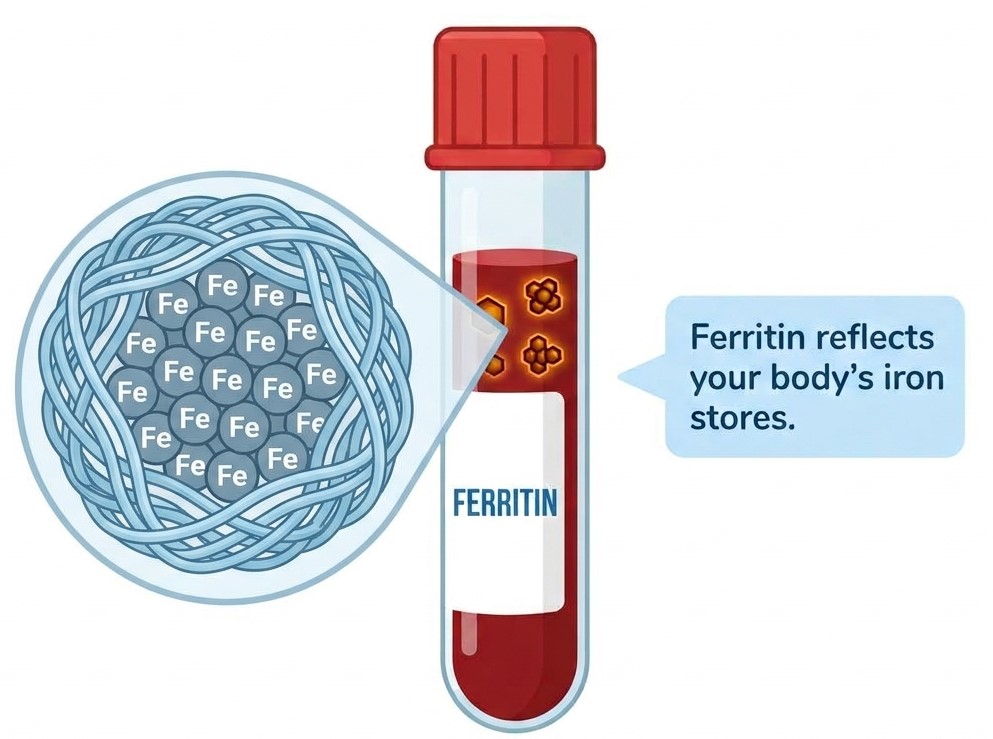
What Is Ferritin and Why It Matters
Ferritin is a protein that stores iron and releases it when the body needs it. Most of the body's iron is stored inside cells, while a smaller amount circulates in the blood. Measuring ferritin through a blood test provides an indirect estimate of the body's iron stores. Low serum ferritin commonly suggests depleted iron stores and may occur before iron-deficiency anemia develops. In contrast, high ferritin does not automatically mean that your body contains too much iron. Ferritin also rises in response to inflammation, infection, liver disease, and several other conditions.
The World Health Organization considers ferritin a useful marker for assessing iron status, but recommends considering inflammation when interpreting results because infection or inflammation can increase ferritin even when iron stores are low.
Normal Ferritin Levels by Age Chart (ng/mL)
There is no single universal ferritin normal range ng/ml that applies to everyone. Laboratories use their own reference intervals based on the testing method, and ranges can differ by age and sex. The following table uses representative reference intervals from Mayo Clinic Laboratories to illustrate how ferritin ranges can change with age. These values are a guide rather than a substitute for the reference range printed on your own laboratory report.
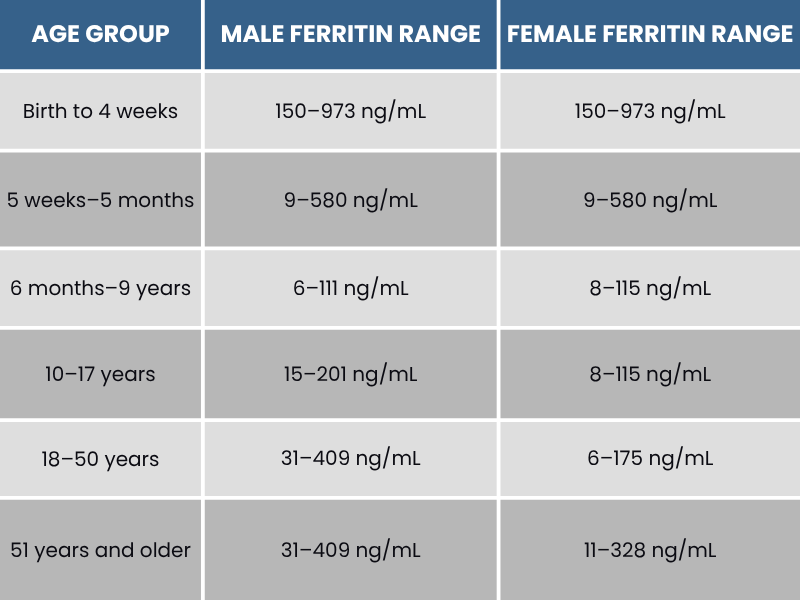
Note: 1 ng/mL is numerically equivalent to 1 µg/L for ferritin.
Ferritin Levels for Women
Ferritin levels in women can be affected by menstruation, pregnancy, dietary iron intake, blood loss, and other factors. People who have regular menstrual periods may lose iron each month, which can contribute to lower ferritin. For adults, the normal ferritin levels for women depend partly on age and the laboratory's reference interval. For example, one commonly used laboratory reference range is 6–175 ng/mL for women aged 18–50 and 11–328 ng/mL for women aged 51 and older.
A ferritin result below the laboratory's reference range may suggest depleted iron stores, particularly when accompanied by symptoms or other blood-test abnormalities. However, ferritin should be interpreted in context rather than used alone to diagnose the cause. Pregnancy also changes iron requirements, so pregnant women may require a different clinical interpretation than non-pregnant adults.
Ferritin Levels for Men
Men generally have higher ferritin levels than premenopausal women because they do not experience regular menstrual blood loss. A representative adult reference interval is 31–409 ng/mL for men aged 18 years and older. However, a ferritin value within this range does not automatically mean that iron status is optimal. Likewise, a result above the laboratory range does not by itself prove iron overload. Additional testing may be needed to determine why ferritin is elevated.
Ferritin in Children and Older Adults
Ferritin changes considerably during childhood. Newborns can have much higher ferritin concentrations than older children, and the reference range gradually changes with age. For example, Mayo Clinic Laboratories lists a range of 150–973 ng/mL for newborns during the first four weeks, compared with 6–111 ng/mL for boys aged 6 months to 9 years. Girls in the same 6-month-to-9-year age group have a listed range of 8–115 ng/mL.
Older adults can also have different reference intervals, particularly women after menopause. This is one reason that normal ferritin levels by age should always be interpreted using an age- and sex-appropriate reference range.
What Is a Good Ferritin Level?
So, what is a good ferritin level? There is no single number that is ideal for every person. A ferritin result is generally considered in relation to the laboratory's reference range, symptoms, medical history, and other iron-related tests. A low result may indicate inadequate iron stores, while a high result may have several possible explanations.
The WHO notes that normal ferritin levels by age below 15 µg/L can indicate iron deficiency in otherwise healthy adults, while a higher threshold may be appropriate when inflammation or infection is present. In adults with inflammation, ferritin below 70 µg/L may indicate iron deficiency. This distinction matters because ferritin is an acute-phase reactant. In other words, the level can rise when the body is responding to inflammation or infection. Someone with iron deficiency may therefore have a ferritin result that appears less low than expected.
Low Ferritin: Causes and Symptoms
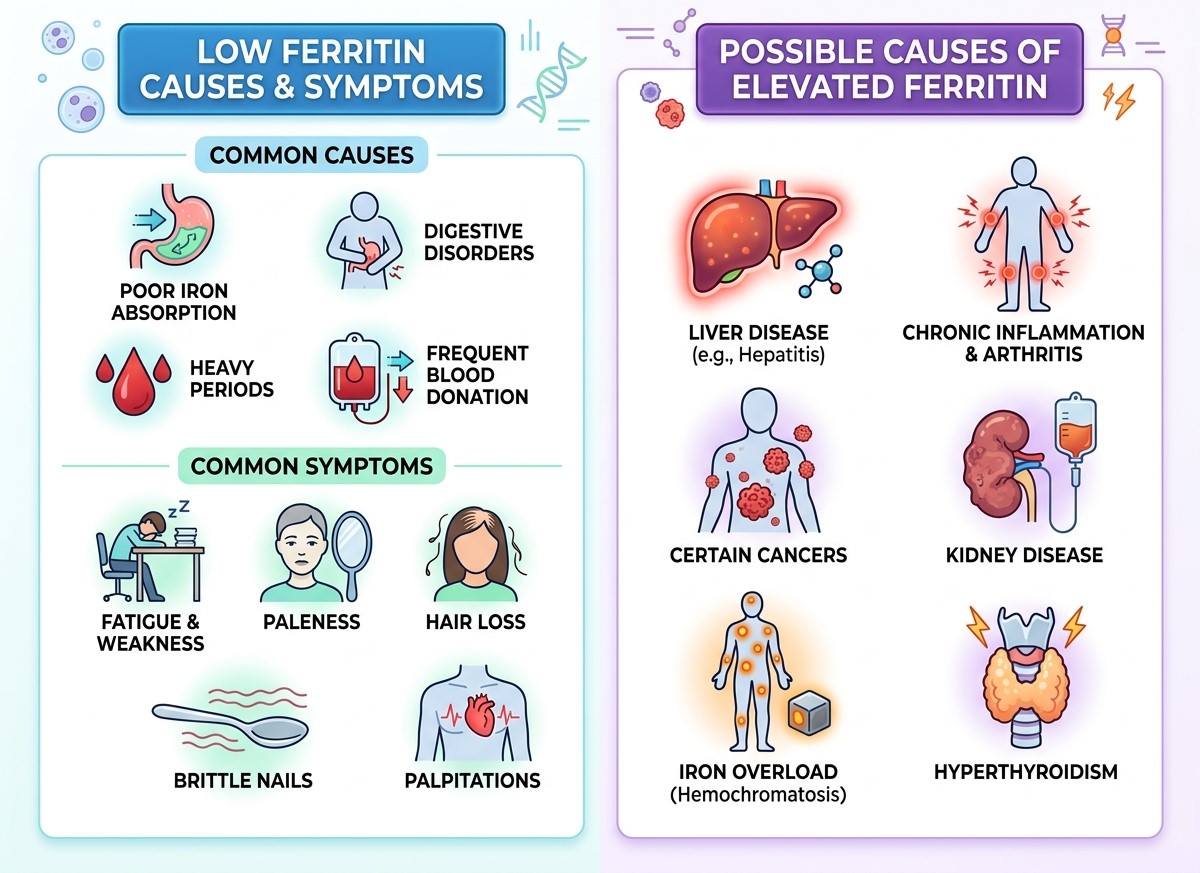
Low ferritin usually means that the body's iron reserves are becoming depleted. Iron deficiency can occur with or without anemia, meaning a person can have low ferritin even when their haemoglobin is still within the normal range.
Common causes include:
- Heavy or prolonged menstrual bleeding
- Pregnancy and increased iron requirements
- Low dietary iron intake
- Frequent blood donation
- Gastrointestinal blood loss
- Conditions that interfere with iron absorption
- Certain gastrointestinal disorders
- Increased iron requirements during periods of growth
Possible symptoms of low iron stores include:
- Fatigue or low energy
- Weakness
- Headaches
- Dizziness
- Reduced concentration
- Shortness of breath, particularly if anaemia develops
- Pale skin
- Hair shedding
- Brittle nails
- Feeling unusually cold
- Restless legs in some people
Low ferritin should not simply be treated with iron supplements without understanding the cause. Persistent iron deficiency, particularly in men and postmenopausal women, may require evaluation for a source of blood loss or impaired absorption.
High Ferritin: What It Can Indicate
High ferritin has a much broader list of possible causes than iron deficiency alone. Because ferritin increases during inflammation, an elevated result may occur even when the body's iron stores are not excessive.
Possible causes include:
- Infection or inflammation
- Liver disease
- Metabolic conditions
- Alcohol-related liver injury
- Chronic inflammatory disorders
- Certain cancers
- Iron overload disorders such as hereditary haemochromatosis
- Repeated blood transfusions
- Excessive iron intake in some circumstances
The WHO cautions that ferritin should not be used alone to diagnose iron overload. For otherwise healthy adults, ferritin above 150 µg/L in menstruating women and above 200 µg/L in men and non-menstruating women may indicate a risk of iron overload, but additional evaluation is needed. Doctors may therefore order tests such as transferrin saturation, serum iron, TIBC, liver enzymes, complete blood count, and inflammatory markers to determine why ferritin is high.
An extremely elevated ferritin, rather than normal ferritin levels by age, deserves medical attention, particularly when it is persistent or accompanied by abnormal liver tests, joint symptoms, unexplained fatigue, or other concerning findings.
Understanding Your Ferritin Result

Ferritin provides an important window into your body's iron status, but the number needs context. Age, sex, menstrual status, pregnancy, inflammation, illness, and the laboratory method can all affect how a result should be interpreted. The best way to understand normal ferritin levels by age is to compare your result with the reference range on your laboratory report and consider it alongside your symptoms and other blood tests. A result that is technically within range may still require discussion if you have symptoms of iron deficiency, while an elevated ferritin level does not necessarily mean iron overload.
If you have recently had blood work and are unsure what your ferritin result means, MySimpleReport can help you understand your lab results in a clearer, more accessible way.