
A thyroid blood test can reveal more than whether the thyroid is producing enough hormones. When a report shows thyroid peroxidase antibodies high, it may indicate that the immune system is reacting against thyroid tissue. However, a positive antibody result does not automatically mean the thyroid is currently underactive or that medication is required.
Understanding the result requires looking at the antibody level alongside thyroid function tests, particularly thyroid-stimulating hormone (TSH) and free thyroxine (free T4). The context matters because antibodies can be present even when thyroid hormone levels remain normal. The American Thyroid Association notes that thyroid antibody testing can help identify autoimmune thyroid disease, while TSH and free T4 provide information about thyroid function.
Quick Answer: What Do High TPO Antibodies Mean?
What does high TPO antibodies mean? It generally indicates thyroid autoimmunity, most commonly associated with Hashimoto’s thyroiditis. However, the result alone does not establish whether the thyroid is currently underactive. TSH and free T4 help determine current thyroid function and whether monitoring or treatment is appropriate.
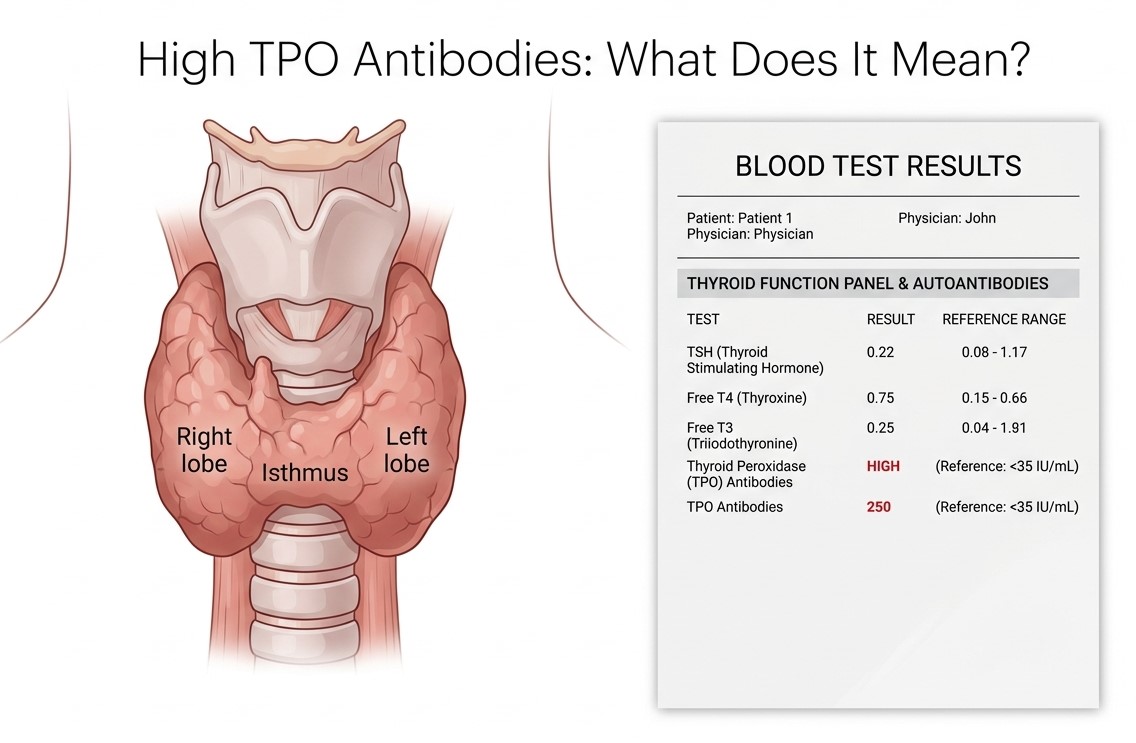
What Are Thyroid Peroxidase Antibodies?
Thyroid peroxidase (TPO) is an enzyme in the thyroid gland that plays an important role in producing thyroid hormones. The immune system can sometimes mistakenly identify thyroid-related proteins as targets and produce antibodies against them. These are known as anti-TPO antibodies.
A TPO antibody test therefore provides information about possible autoimmune activity rather than directly measuring how well the thyroid is functioning. This distinction is important because a person may have positive antibodies while TSH and free T4 remain within their laboratory's reference ranges. In some people, antibodies are detected before measurable thyroid dysfunction develops. Others may have positive antibodies and remain euthyroid, meaning their thyroid continues to produce an appropriate amount of hormone. Therefore, thyroid peroxidase antibodies high is best understood as a marker that needs to be interpreted alongside the rest of the thyroid evaluation.
Understanding Your TPO Antibody Result
One important point when interpreting thyroid peroxidase antibodies high is that there is no single antibody cutoff that applies universally to every laboratory.
What Is the Thyroid Peroxidase Antibodies Normal Range?
The thyroid peroxidase antibodies normal range depends on the laboratory, testing method and units used. Your laboratory report should provide the applicable reference interval and indicate whether the result is within or above that range. This is why comparing your result with a reference value found on another website or from a different laboratory can be misleading. The same numerical value may be interpreted differently depending on the assay and laboratory reference range.
The antibody number also does not directly measure the severity of thyroid dysfunction. A particularly high antibody concentration does not necessarily mean that thyroid hormone levels are severely abnormal. Similarly, a lower positive result does not mean that autoimmune thyroid activity is clinically unimportant. The more useful question is whether the antibody result is accompanied by evidence that thyroid function has changed.
How High TPO Antibodies Relate to TSH and Free T4
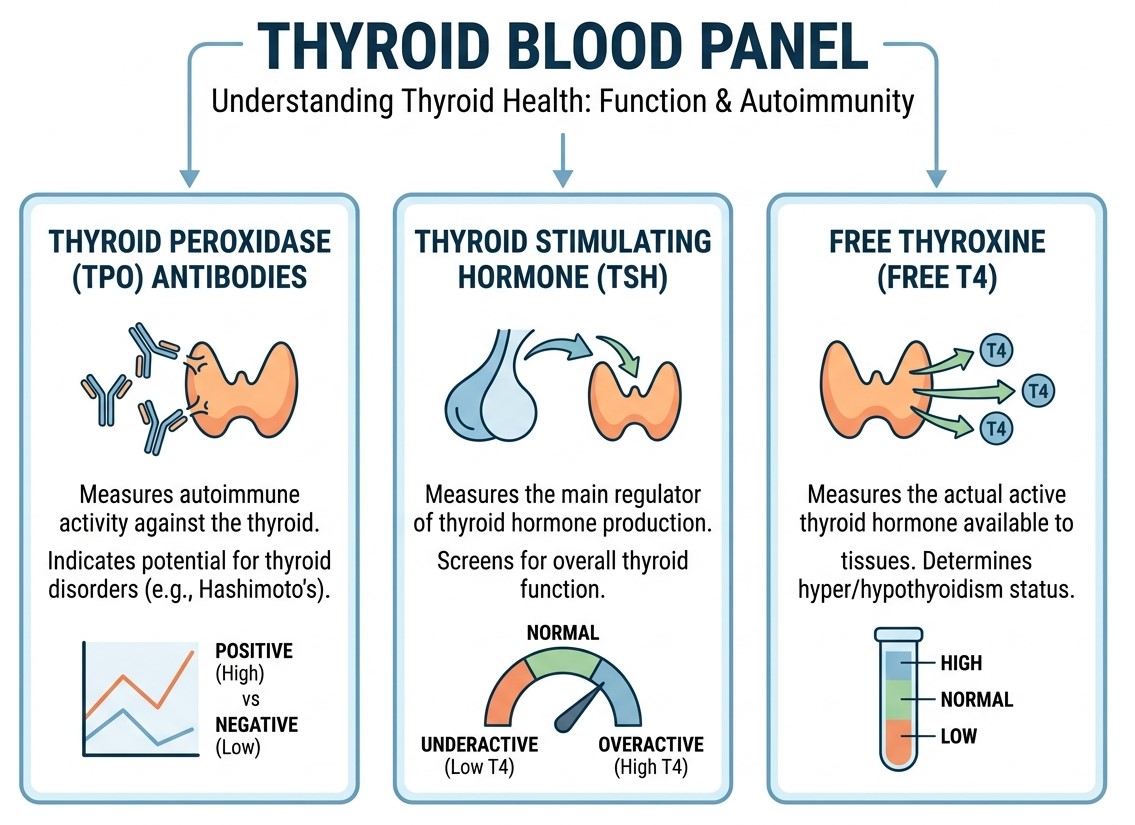
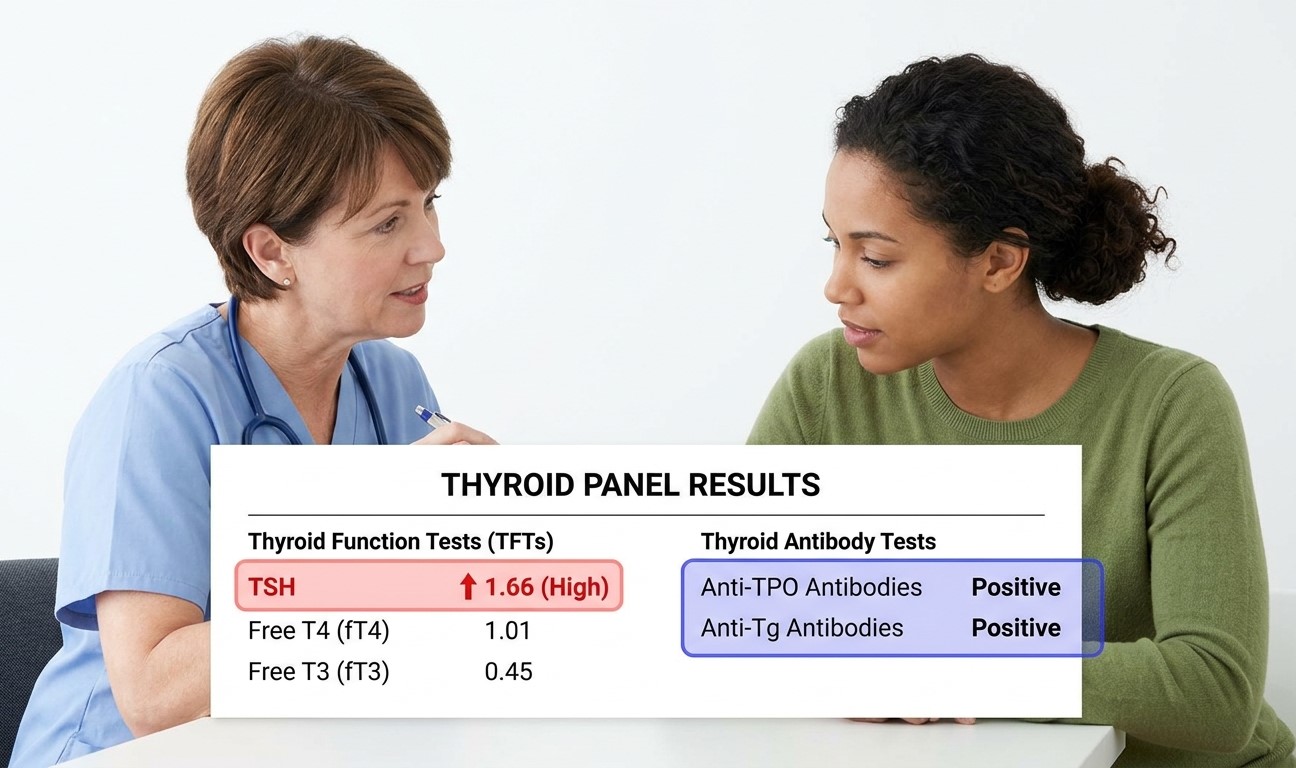
After finding thyroid peroxidase antibodies high, the next step is generally to consider the complete thyroid-function picture. TSH is commonly used as the primary blood test for assessing whether the thyroid is producing an appropriate amount of hormone. Free T4 provides additional information about circulating thyroid hormone. Together, these results help distinguish normal thyroid function from overt or subclinical thyroid dysfunction.
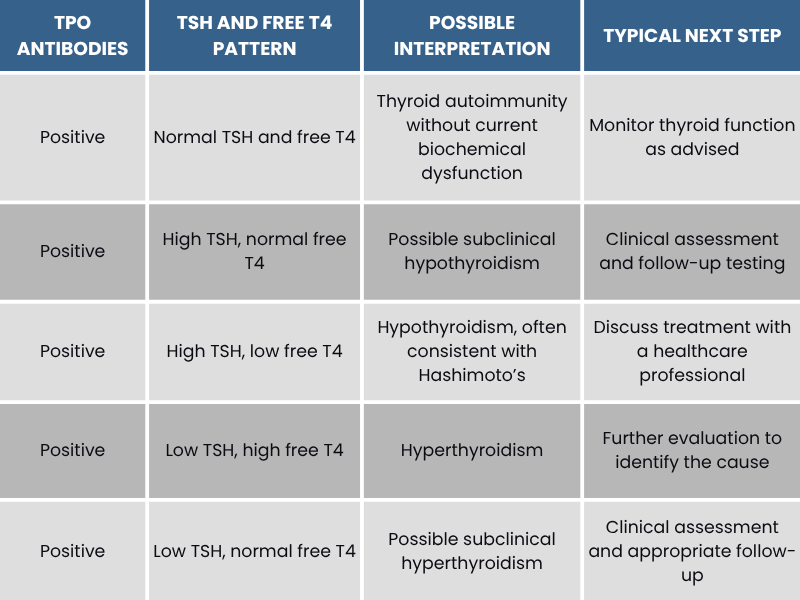
These patterns are simplified for patient education. Interpretation can vary according to age, symptoms, pregnancy status, medications, previous thyroid disease and other clinical factors.
Does a High TPO Result Mean You Have Hashimoto’s?
A positive TPO antibody result can strongly support autoimmune thyroid disease, particularly when it occurs alongside an elevated TSH or other evidence of hypothyroidism. However, antibodies should not be interpreted in isolation. Hashimoto’s disease can sometimes be present when antibodies are elevated but TSH and free T4 are still normal. In this situation, thyroid hormone treatment is not automatically required.
This is another reason why thyroid peroxidase antibodies high should be regarded as evidence of thyroid autoimmunity rather than a direct measurement of thyroid performance. The actual treatment decision depends on thyroid function and the individual's clinical circumstances.
What Symptoms Can Occur With Thyroid Dysfunction?
TPO antibodies themselves do not reliably predict how a person will feel. Symptoms are more closely associated with whether thyroid hormone production has become abnormal. If hypothyroidism develops, possible symptoms include:
- Fatigue or reduced energy
- Feeling unusually cold
- Constipation
- Dry skin
- Weight changes
- Hair changes
- Menstrual irregularities
- Muscle aches
Hyperthyroidism can produce a different pattern, including:
- Rapid or irregular heartbeat
- Tremor
- Heat intolerance
- Increased sweating
- Unintentional weight loss
- Difficulty sleeping
- Restlessness
These symptoms are not specific to thyroid disease. Blood testing is needed to determine whether the thyroid is actually functioning abnormally.
What Should You Do If Your TPO Antibodies Are High?
If a report shows thyroid peroxidase antibodies high, the result should be considered alongside the rest of the thyroid panel rather than acted on independently.
1. Check TSH and Free T4
These tests help establish whether the thyroid is currently functioning normally, is underactive or is overactive.
2. Review Your Symptoms and Medical History
A healthcare professional may consider symptoms, previous thyroid problems, family history, thyroid enlargement, medications and other relevant medical conditions.
3. Do Not Treat the Antibody Number Alone
Positive antibodies do not automatically mean that thyroid hormone replacement is necessary. A person can have elevated antibodies while thyroid hormone production remains normal.
4. Monitor Thyroid Function When Appropriate
If thyroid function is currently normal, follow-up testing may be recommended because some people with autoimmune thyroid antibodies later develop thyroid dysfunction.
Repeatedly measuring antibody levels is generally less useful than monitoring TSH and free T4. The important clinical question is whether thyroid function is changing, not simply whether the antibody number has risen or fallen.
High TPO Antibodies During Pregnancy
Pregnancy requires particular attention when thyroid antibodies are present. Thyroid hormone requirements change during pregnancy, and thyroid-function testing needs to be interpreted according to the pregnancy stage. Someone who is pregnant, planning pregnancy or recently postpartum should tell their healthcare professional about a history of thyroid disease or positive TPO antibodies. Additional thyroid-function monitoring may be appropriate depending on the individual's circumstances.
A positive antibody result during pregnancy does not automatically mean that thyroid medication is required. Decisions depend on TSH, free T4, pregnancy status and other clinical factors.
Can High TPO Antibodies Return to Normal?
TPO antibody levels can change over time, and a positive result may persist even when thyroid hormone levels remain normal. The main goal of follow-up is generally not to reduce the antibody number itself. Instead, clinicians focus on whether the thyroid is producing an appropriate amount of hormone. If autoimmune thyroid disease has affected thyroid function, treatment is directed at the resulting thyroid disorder rather than simply attempting to eliminate the antibodies.
Dietary changes or supplements should not be presented as guaranteed methods for normalising TPO antibodies. Anyone considering supplements for thyroid health should discuss them with a healthcare professional, particularly when taking thyroid medication.
High TPO Antibodies: Common Causes and What They May Indicate
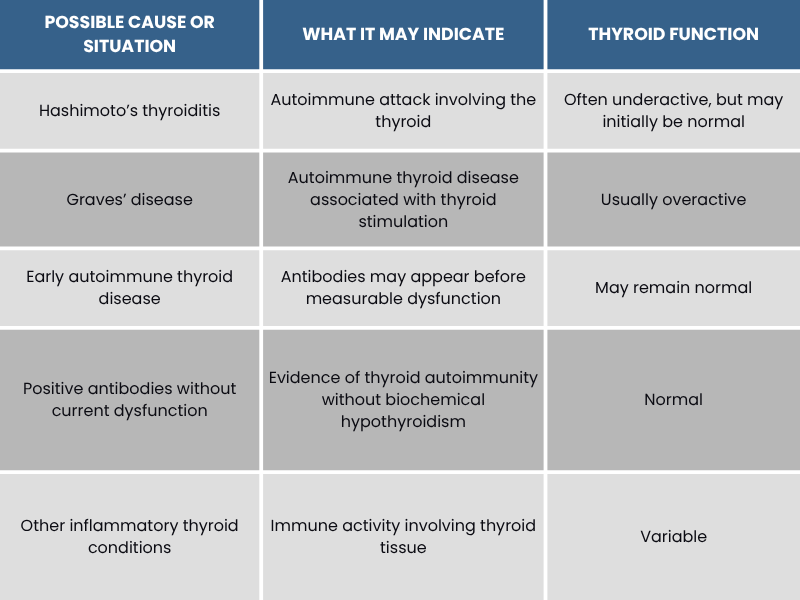
The presence of TPO antibodies is therefore only one component of the overall diagnostic picture.
When Should You See a Doctor?
Medical evaluation is particularly important if thyroid peroxidase antibodies high occurs alongside abnormal TSH or free T4, or if you have symptoms suggesting thyroid dysfunction.
You should also discuss the result with a healthcare professional if you have known thyroid disease, thyroid enlargement, a strong family history of thyroid problems, are pregnant or planning pregnancy, or have previously been diagnosed with an autoimmune thyroid disorder. Significant or rapidly worsening symptoms also warrant medical assessment rather than relying on the antibody result alone.
Understanding What Your TPO Result Means
A thyroid peroxidase antibodies high result is primarily a marker of thyroid autoimmunity. It can support conditions such as Hashimoto’s thyroiditis, but it does not independently show whether the thyroid is currently underactive or overactive. The most useful next step is to interpret the antibody result alongside TSH and free T4, consider symptoms and medical history, and follow the monitoring or treatment plan recommended by a healthcare professional. Looking at the complete thyroid panel provides a much clearer picture than focusing on the antibody number alone.
Have a medical report you want to understand more clearly? Explore MSR today and make sense of your health information.