
If these results appear on a CBC, it usually means your red blood cells are larger than expected and contain more hemoglobin per cell. This pattern is called macrocytosis and may occur with B12 or folate deficiency, alcohol use, liver disease, or hypothyroidism. It is usually not an emergency, but the cause should be found.
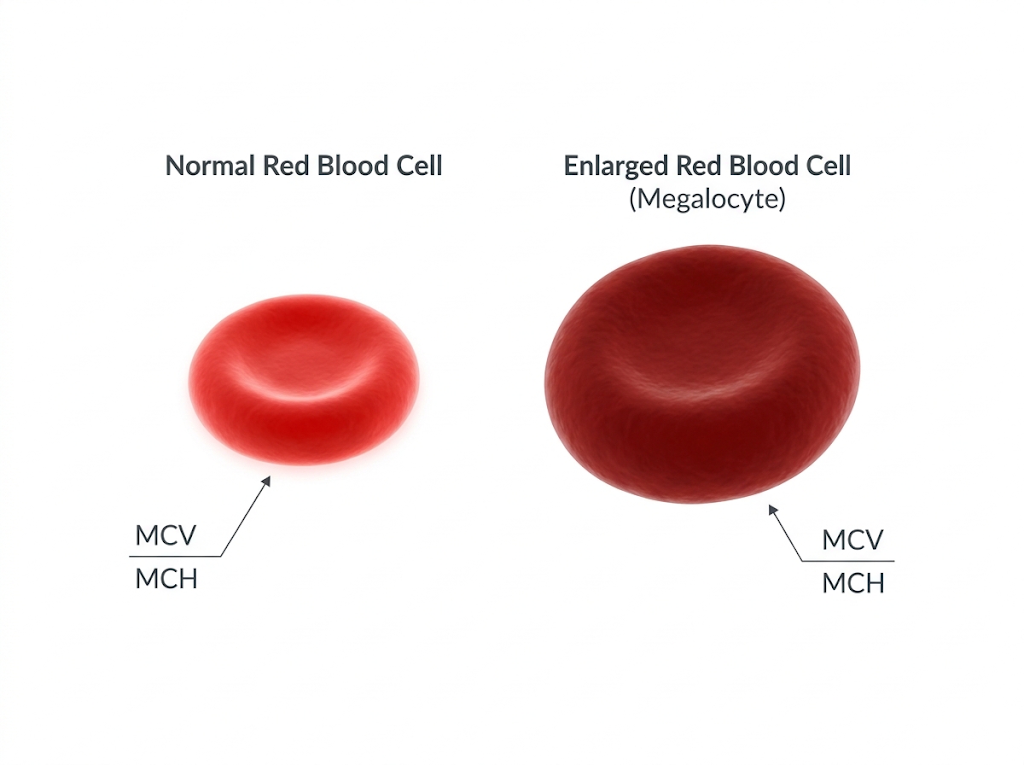
What Do MCV and MCH Mean on a Blood Test?
MCV (Mean Corpuscular Volume): Red Blood Cell Size
MCV (Mean Corpuscular Volume) measures the average size of your red blood cells. It is reported in femtoliters (fL) as part of a CBC. A value above the laboratory reference interval means the cells are larger than normal. This is known as macrocytosis, and with anemia, it may be described as macrocytic anemia.
MCH (Mean Corpuscular Hemoglobin): Hemoglobin Per Cell
MCH (Mean Corpuscular Hemoglobin) measures the average amount of hemoglobin contained in one red blood cell. MCH is reported in picograms (pg). A higher value often occurs when red blood cells are larger, although MCH and MCV measure different characteristics.
Why MCV and MCH Usually Rise Together
Larger red blood cells generally have room for more hemoglobin, so MCV and MCH can increase at the same time. However, one abnormal result does not establish a diagnosis. Your hemoglobin, hematocrit, RBC count, RDW, reticulocyte count, medical history, and medications help determine why the values changed.
What Is a High MCV and MCH?
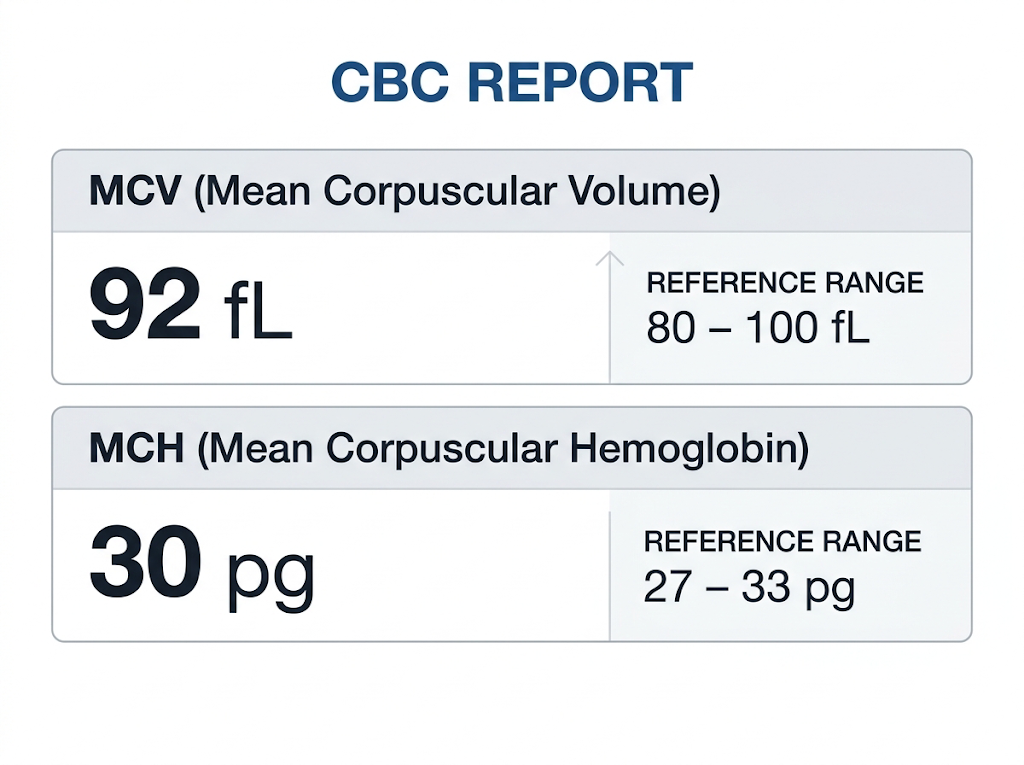
The high MCV and MCH normal range is best understood using the reference interval printed by your laboratory. Reference ranges vary slightly between laboratories, age groups, and testing methods. Typical adult ranges are approximately:
| Test | Typical Adult Reference Range | What It Measures |
| MCV | 80–100 fL | Average red blood cell size |
| MCH | 27–33 pg | Average hemoglobin per red blood cell |
Your report's own reference interval should take priority. A slightly elevated result may differ in significance from a substantially elevated value, especially with other abnormal CBC findings.
What Does High MCV and MCH Mean?
The phrase what does high MCV and MCH mean is best answered by looking at the entire CBC rather than these two numbers alone. The pattern can indicate enlarged red blood cells, with or without anemia. When hemoglobin is also low, the finding may point toward a nutritional deficiency or another condition affecting red blood cell production.
Common Causes of High MCV and MCH
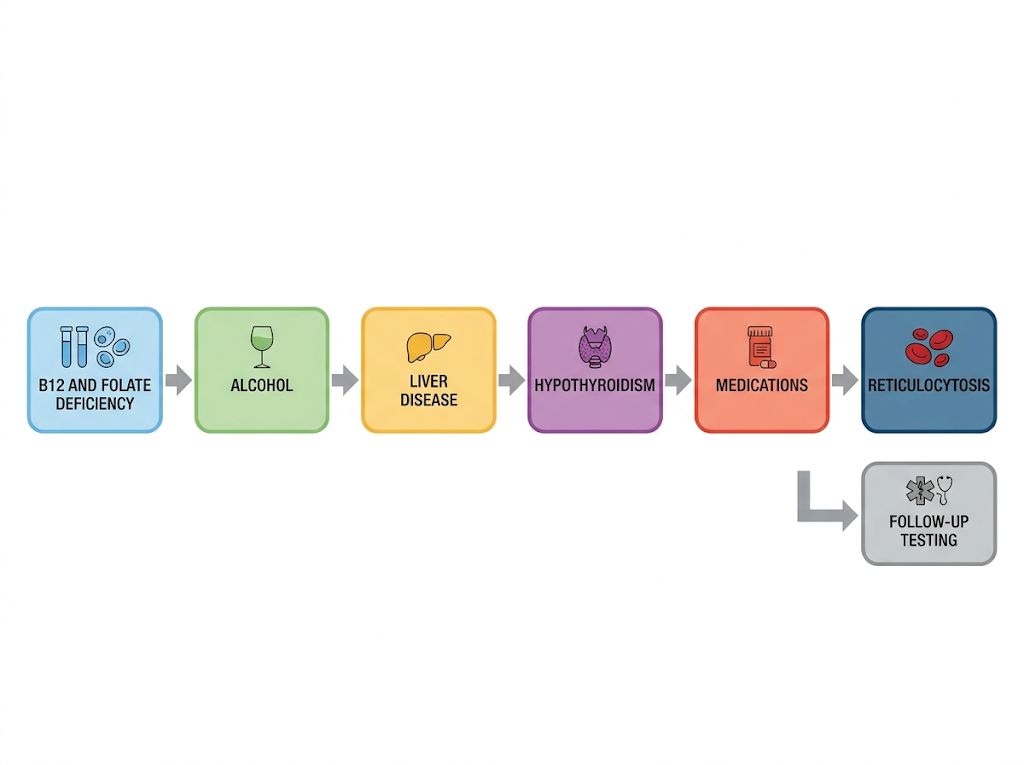
The high MCV and MCH causes range from nutritional deficiencies to medications and temporary changes in red blood cell production. Common possibilities include:
Vitamin B12 Deficiency
Vitamin B12 is required for normal DNA synthesis and red blood cell formation. When levels are too low, red blood cells may become unusually large. Deficiency can develop from inadequate intake, impaired absorption, gastrointestinal conditions, or medications that affect absorption. Neurological symptoms such as numbness or tingling can also occur.
Folate (Folic Acid) Deficiency
Folate supports cell division and red blood cell production. A deficiency may cause enlarged red blood cells and anemia. Poor dietary intake, increased requirements, malabsorption, and some medications can contribute. Because B12 and folate deficiencies can produce similar blood-count patterns, testing helps distinguish the cause.
Alcohol Use
Regular or heavy alcohol consumption can raise MCV even when significant anemia is not present. Alcohol can affect red blood cell production and may also contribute to poor nutrition or liver problems. MCV may improve after reducing or stopping alcohol.
Liver Disease
The liver plays an important role in metabolism and overall blood health. Liver disorders can be associated with larger red blood cells and abnormal MCV results. If liver disease is suspected, clinicians may review liver enzymes and other markers alongside the CBC.
Hypothyroidism (Underactive Thyroid)
An underactive thyroid can sometimes be associated with an elevated MCV. Symptoms may include tiredness, feeling unusually cold, constipation, dry skin, or weight changes, although some people have few symptoms. A thyroid-stimulating hormone (TSH) test can help evaluate thyroid function.
Certain Medications
Several medications can affect red blood cell production or DNA synthesis and lead to macrocytosis. Examples include some chemotherapy drugs, antimetabolites, and anticonvulsants. Never stop a prescribed medication because of an abnormal CBC without discussing it with your clinician.
Recovery After Blood Loss (High Reticulocytes)
After significant blood loss or increased red blood cell destruction, the bone marrow releases more reticulocytes, which are immature red blood cells. Reticulocytes are larger than mature red blood cells, so an increased reticulocyte count can temporarily raise MCV. The reticulocyte count can therefore help.
High MCV and MCH With Low RBC: What It Means
The high MCV MCH low RBC meaning depends on the rest of the blood count and the clinical context. A low RBC count with enlarged red blood cells can occur with B12 or folate deficiency, alcohol-related changes, liver disease, hypothyroidism, medication effects, or other disorders.
Low hemoglobin and hematocrit indicate anemia. Persistent changes deserve assessment rather than interpretation from one CBC value alone.
Symptoms of High MCV and MCH
When There Are No Symptoms
Elevated MCV and MCH may cause no symptoms at all. The abnormality is often found during routine testing. The numbers alone do not indicate serious illness. The next step is identifying whether there is a reversible cause.
Signs of Underlying Anemia (Fatigue, Pale Skin, Shortness of Breath)
If enlarged red blood cells occur with anemia, symptoms may include fatigue, weakness, pale skin, dizziness, headaches, or shortness of breath, particularly with exertion. B12 deficiency may also cause numbness, tingling, balance problems, or cognitive changes. New or rapidly worsening symptoms should be assessed promptly.
How Doctors Find the Cause
B12, Folate, and Thyroid Tests
Evaluation usually starts by reviewing the CBC and medical history. Clinicians may order vitamin B12, folate, and thyroid tests. Methylmalonic acid or homocysteine may sometimes help clarify suspected B12 deficiency.
Liver Function and Reticulocyte Count
Liver function tests can help identify a liver-related explanation, while a reticulocyte count can show whether the bone marrow is responding to blood loss or red blood cell destruction. A blood smear may also provide useful information. Combined results are more informative than MCV or MCH alone.
Should You Worry About High MCV and MCH?
These results are not automatically a sign of a serious disease. Mild abnormalities can have relatively simple explanations, but persistent or marked elevation should not be ignored. Urgency depends on the cause, degree of elevation, anemia, symptoms, and other CBC findings.
Seek prompt medical attention for severe weakness, chest pain, significant breathing difficulty, fainting, confusion, or other concerning symptoms. Otherwise, arrange follow-up so the underlying cause can be evaluated.
How These Results Are Treated
Treatment depends entirely on the cause. B12 deficiency may require dietary changes or B12 supplementation, while folate deficiency is treated with folate after the cause has been considered. Thyroid disease, liver disease, alcohol-related changes, medication effects, and blood loss require management appropriate to the underlying problem.
Do not assume a supplement will correct every abnormal result. For example, folic acid can improve the blood-count abnormalities of B12 deficiency while neurological problems continue. Testing guides appropriate treatment.
Understand Your CBC Results With My Simple Report
A CBC contains numbers that can be difficult to interpret in isolation. My Simple Report helps you review laboratory results in a clearer, more organized format and discuss them with your healthcare professional. If your CBC shows an unusual MCV, MCH, RBC count, hemoglobin, or another marker, My Simple Report can help you understand it. It is informational and not a substitute for medical care.
Ready to understand your lab results more clearly? Explore My Simple Report and turn complex laboratory data into information you can review and discuss with confidence.