Triglyceride to HDL Ratio: What's a Good Number? (Chart)
The triglycerides HDL ratio is calculated by dividing your triglyceride level by your high-density lipoprotein (HDL) cholesterol level. Using US units (mg/dL), a ratio below 2.0 is generally considered good, while a ratio above 3.0 is high. A higher result may indicate insulin resistance and increased heart disease risk, although the ratio alone cannot diagnose either condition.
Understanding this number can help you interpret your lipid panel beyond individual cholesterol measurements. However, the result must be considered alongside your other blood tests, medical history, and overall risk factors.
What Is the Triglyceride to HDL Ratio?
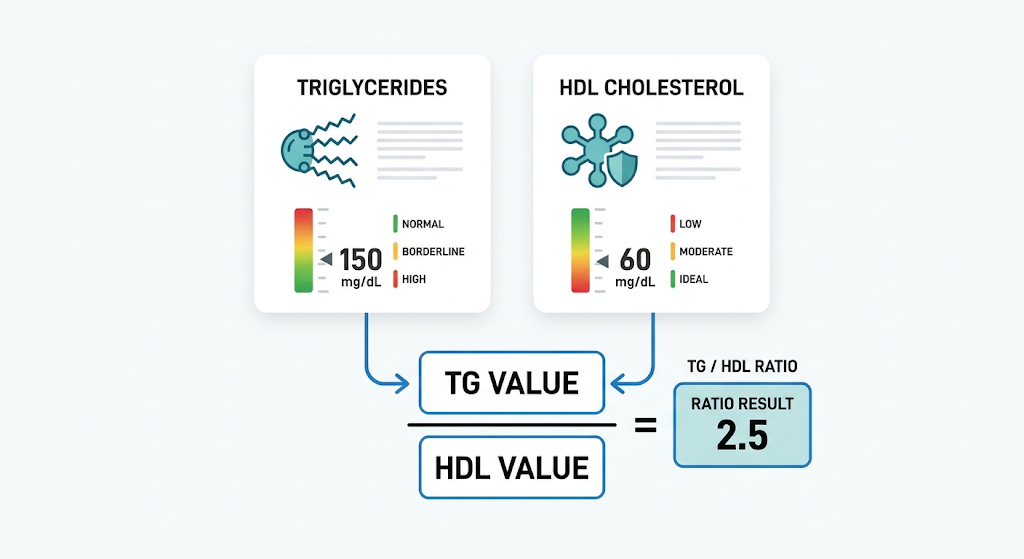
The triglycerides HDL ratio compares two types of blood lipids to provide insight into how your body processes fats and manages metabolic health. Triglycerides are fats that store excess energy from food, while HDL helps transport cholesterol from tissues back to the liver for processing. A higher triglyceride level combined with lower HDL can create an elevated ratio, which is associated with certain metabolic abnormalities.
Triglycerides vs. HDL Cholesterol
Although both measurements appear on a standard lipid panel, they reflect different aspects of lipid metabolism.
- Triglycerides: Elevated levels may occur when your body receives more energy than it needs, particularly from excess calories, refined carbohydrates, and alcohol.
- HDL cholesterol: Often called good cholesterol, HDL helps transport cholesterol away from tissues. Lower levels are associated with an increased risk of cardiovascular problems.
The relationship between these measurements can provide additional context, but neither the ratio nor an individual result tells the whole story.
Why This Ratio Matters (A Powerful Metabolic Marker)
The triglycerides HDL ratio is useful because it can reflect a pattern of lipid abnormalities associated with impaired insulin sensitivity. This pattern may appear even when some other cholesterol measurements seem relatively reassuring. Research suggests that the ratio can help identify people who may have a greater likelihood of insulin resistance and an unfavourable distribution of LDL particles. However, it is not consistently a better predictor of heart disease than LDL cholesterol or established cardiovascular risk assessment tools. It should complement, rather than replace, those measures.
How to Calculate Your Triglyceride to HDL Ratio
To understand how to calculate triglyceride hdl ratio, use triglyceride and HDL results from the same lipid panel.
Formula:
Triglyceride to HDL ratio = Triglycerides ÷ HDL cholesterol
For example, suppose your results are:
- Triglycerides: 150 mg/dL
- HDL cholesterol: 50 mg/dL
Calculation: 150 ÷ 50 = 3.0
Your ratio is 3.0, which falls into the high category under the general US-unit interpretation used in this guide.
Important units note: When both results are reported in mg/dL, divide the numbers directly. If both are reported in mmol/L, you can also divide them directly, but the resulting ratio has different numerical thresholds. Do not divide a triglyceride result in mg/dL by an HDL result in mmol/L.
What's a Good Triglyceride to HDL Ratio?
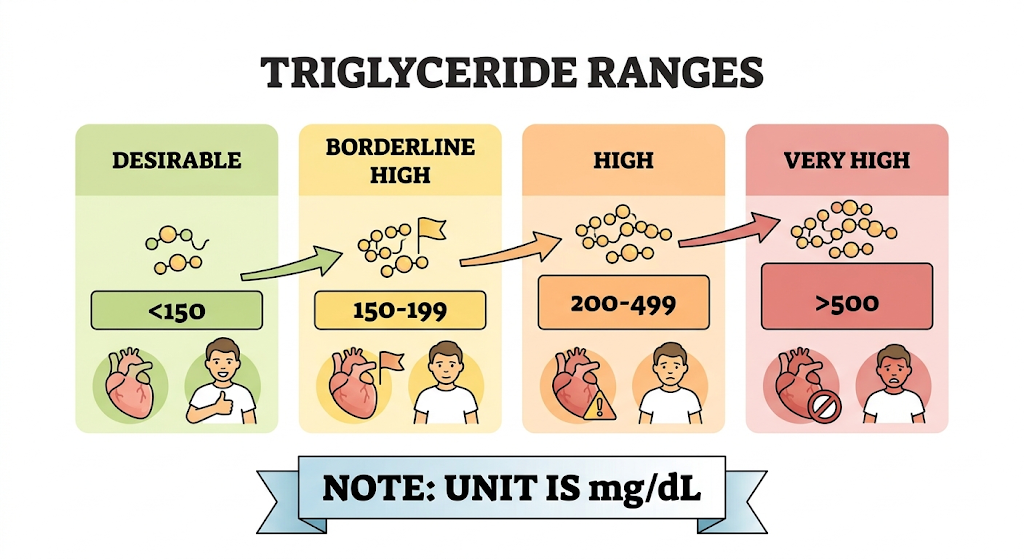
The triglycerides HDL ratio is commonly interpreted using approximate categories based on mg/dL measurements. These are practical reference points, not universally accepted diagnostic cut-offs. Published research uses varying thresholds depending on the population and outcome being studied.
| Ratio (mg/dL) | Interpretation | General Meaning |
| Below 1.0 | Optimal range | Generally favourable lipid pattern |
| 1.0 to below 2.0 | Good | Generally favourable ratio |
| 2.0 to 3.0 | Borderline | May warrant closer assessment |
| Above 3.0 | High | May indicate an unfavourable metabolic pattern |
If you are asking what is a good triglyceride to HDL ratio, a result below 2.0 is generally considered good, while below 1.0 is often described as optimal. These categories are not official diagnostic standards, and a favourable ratio does not guarantee low cardiovascular risk. The triglyceride HDL ratio normal range is therefore best understood as a general guide rather than a substitute for your laboratory's reference intervals or a clinician's assessment.
What Does a High Triglyceride to HDL Ratio Mean?
A high result suggests that triglycerides are relatively elevated compared with HDL. This pattern can provide a clue about underlying metabolic health, but it does not establish a specific diagnosis.
Insulin Resistance and Metabolic Syndrome
One important consideration is insulin resistance, a condition in which the body's cells respond less effectively to insulin. The body may compensate by producing more insulin, while fat metabolism becomes less efficient.
This can contribute to higher triglyceride levels and lower HDL. The pattern is frequently associated with metabolic syndrome, a combination of risk factors that may include abdominal obesity, raised blood pressure, elevated blood glucose, high triglycerides, and low HDL. A high ratio may prompt further assessment of glucose regulation, waist circumference, blood pressure, and other relevant measurements.
Heart Disease Risk and Small, Dense LDL
A high ratio is also associated with a greater likelihood of small, dense LDL particles in some populations. These particles may be more prone to entering artery walls and undergoing changes that contribute to plaque formation. However, the ratio cannot determine your LDL particle size directly. It also cannot independently quantify your cardiovascular risk. Your LDL cholesterol, non-HDL cholesterol, blood pressure, smoking status, age, diabetes status, and family history all contribute to a more complete assessment.
What Causes a High Ratio?
Several factors can contribute to an elevated result, including:
- Dietary patterns: Frequent consumption of sugary drinks, refined carbohydrates, and excess calories can increase triglycerides.
- Excess body weight: Particularly abdominal fat, which is associated with changes in lipid metabolism.
- Physical inactivity: Limited exercise may contribute to higher triglycerides and lower HDL.
- Alcohol consumption: Alcohol can raise triglycerides, particularly when consumed in excess.
- Medical conditions: Diabetes, hypothyroidism, kidney disease, and certain liver conditions may affect lipid levels.
- Medications and genetics: Some medicines and inherited lipid disorders can influence triglycerides or HDL.
A single result may also be affected by recent food intake, alcohol consumption, illness, or normal biological variation. Follow your clinician's instructions about fasting and repeat testing.
How to Improve Your Triglyceride to HDL Ratio

Improving the triglycerides HDL ratio usually involves addressing the factors that influence both measurements. Lifestyle changes can help, although the most appropriate approach depends on your overall health and the underlying cause.
Cut Refined Carbs and Sugar
Reduce sugary beverages, sweets, and heavily refined carbohydrate foods. Choose fibre-rich vegetables, whole grains, beans, and whole fruit more often. These substitutions can support healthier triglyceride levels and improve overall dietary quality.
Exercise and Lose Excess Weight
Regular physical activity can help lower triglycerides and support HDL levels. Aim for at least 150 minutes of moderate-intensity aerobic exercise each week, if appropriate for your health, alongside muscle-strengthening activities. If you carry excess weight, gradual and sustainable weight loss may improve lipid levels and insulin sensitivity. Even modest changes can be beneficial.
Choose Healthy Fats
Replace some saturated fats with unsaturated sources, such as olive oil, nuts, seeds, and oily fish. Include adequate dietary fibre and balanced meals rather than relying on restrictive diets or unproven supplements.
Limit Alcohol
Alcohol can substantially raise triglycerides in some people. Reducing intake or avoiding alcohol may help, particularly when levels are elevated. If your triglycerides are very high, seek medical advice about whether complete avoidance is appropriate.
Triglyceride to HDL Ratio in mmol/L (UK, Canada, Australia)
In countries where lipid measurements are commonly reported in mmol/L, the ratio must be interpreted using thresholds appropriate to those units. Because triglycerides and HDL use different conversion factors, the numerical ratio calculated from mmol/L results is approximately 0.436 times the ratio calculated from mg/dL results.
| Ratio in mg/dL | Approximate Equivalent in mmol/L | General Interpretation |
| Below 1.0 | Below 0.44 | Optimal |
| 1.0 to below 2.0 | 0.44 to below 0.87 | Good |
| 2.0 to 3.0 | 0.87 to 1.31 | Borderline |
| Above 3.0 | Above 1.31 | High |
These are mathematical equivalents of the earlier categories, not independently validated clinical cut-offs for every population. For example, triglycerides of 1.7 mmol/L divided by HDL of 1.3 mmol/L gives a ratio of approximately 1.31. Interpret this result according to local clinical guidance and your complete lipid profile.
When to See a Doctor
Discuss an elevated ratio with your healthcare professional, especially if you also have high triglycerides, low HDL, diabetes, high blood pressure, or a family history of premature heart disease. Your clinician may recommend checking fasting glucose or HbA1c, thyroid function, liver or kidney markers, and other lipid measurements depending on your history. Treatment decisions should be based on your overall risk rather than the ratio alone.
Very high triglyceride levels deserve particular attention because they can increase the risk of acute pancreatitis. Seek prompt medical advice if your triglycerides are markedly elevated. Chest pain, sudden shortness of breath, or other symptoms suggestive of a heart attack require emergency assessment regardless of your ratio.
Understand Your Lipid Panel With My Simple Report
A lipid panel contains several measurements that work together to explain your cholesterol and triglyceride profile. Reviewing each result alongside the others can help you identify questions to discuss with your healthcare professional.
My Simple Report helps you understand your laboratory results in clearer, more accessible language. Explore your report to learn what your measurements may indicate, understand relevant reference ranges, and prepare for a more informed conversation about your health.
Put Your Ratio Into Context
The triglycerides HDL ratio is a useful additional marker that can highlight a lipid pattern associated with metabolic problems and increased heart disease risk. In mg/dL, a result below 2.0 is generally favourable, while a result above 3.0 deserves closer attention.
However, no single number can establish whether you have insulin resistance or predict your future health with certainty. Interpret your result alongside the complete lipid panel, other risk factors, and professional medical advice. Sustainable dietary changes, regular exercise, weight management where appropriate, and limiting alcohol can help improve an unfavourable lipid pattern.
Make your lab results easier to understand with My Simple Report. Visit MySimpleReport to explore your results and take the next step towards understanding your health.